

Oat Bread
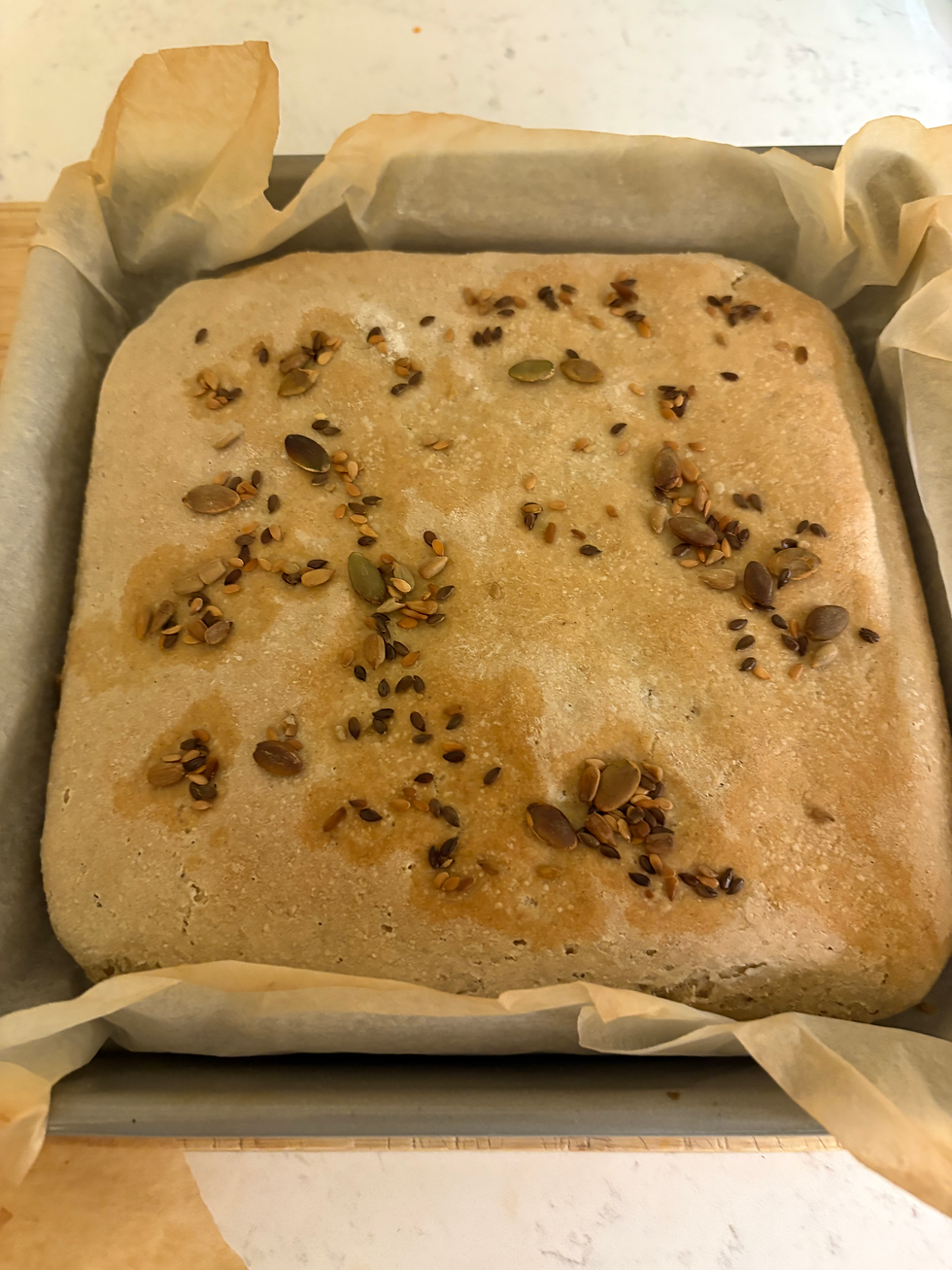
As a part of our new outlook on food, we have identified the need for a bread with oat or barley flour. More specifically we are looking for nutrition that provides about 1g of beta-glucan for when we are likely to miss our daily target of 3g through porridge or pearl barley.
Beta-glucan is a type of soluble fibre found mainly in oats and barley. In the gut it forms a gel that helps prevent some bile acids from being reabsorbed; the liver then uses cholesterol from the blood to make replacement bile acids, helping to lower LDL (“bad”) cholesterol. Good sources include porridge oats, pinhead/steel-cut oats, oat bran, oat flour, pearl barley and barley flour. The recognised effective daily intake is 3 g of oat or barley beta-glucan, ideally eaten regularly as part of a balanced diet.
We went simple on this and sourced some organic oat flour from Doves Farm to pair it with an equal amount of strong white bread flour. The recipe was a basic bread mix as follows:-
Ingredients
250g strong white bread flour
250g organic oat flour
7g sachet of fast acting yeast
5g salt
400ml blood warm water (80% hydration)
1/2 tsp EVOO for oiling the pan
Method
Mix all dry ingredients together in a bowl.
Add the blood warm water and mix well with a wooden spoon.
Flour your hands and then knead or stretch and turn as you prefer to get the gluten acting in the white flour. The oat flour has no gluten so the white flour has to do the work for both.
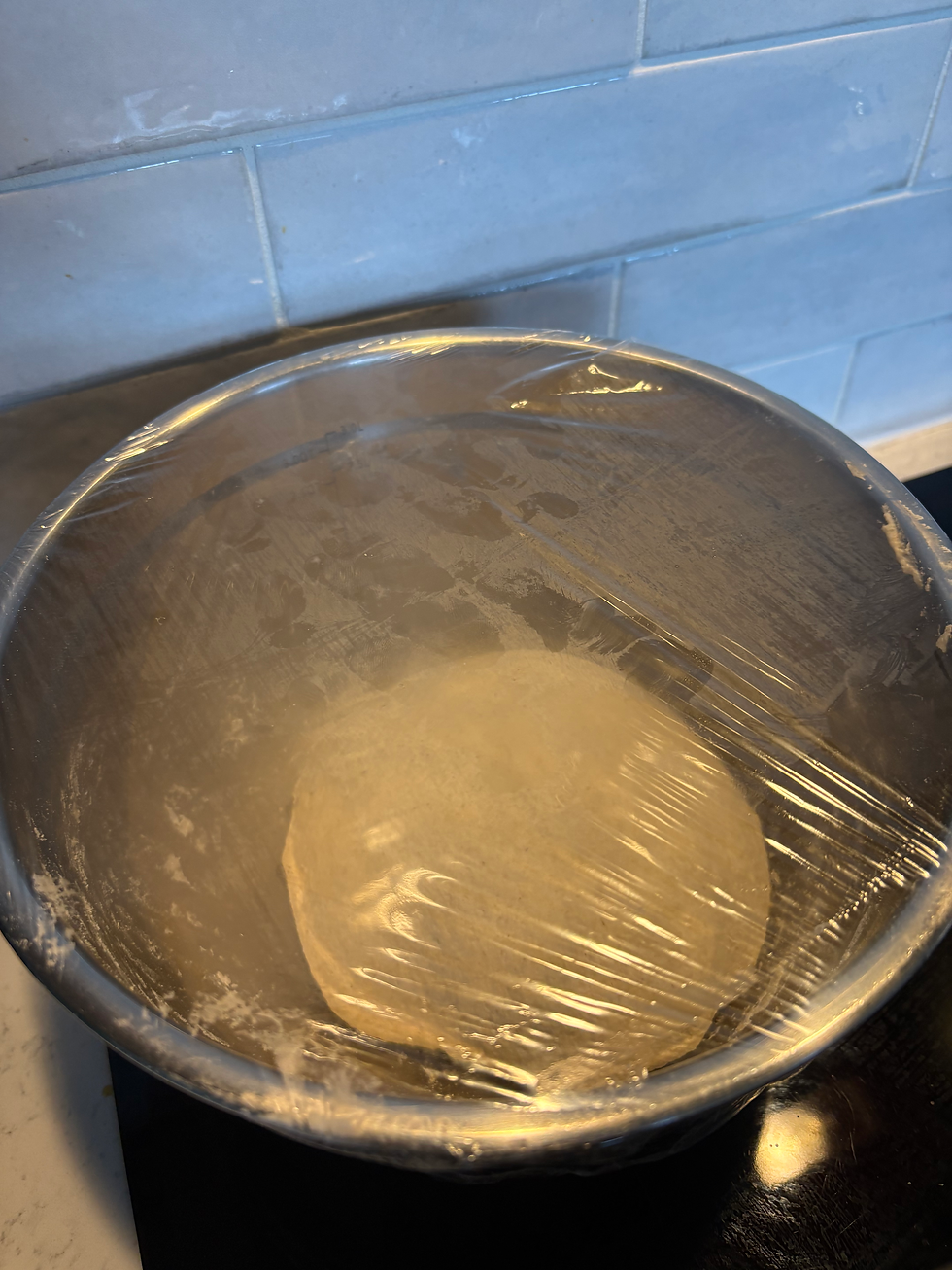
Cover and leave for about an hour to rise. Then stretch and turn (easier than kneading given that there is 80% hydration in the mix). Repeat a couple more times after about 30 to 60 minutes.
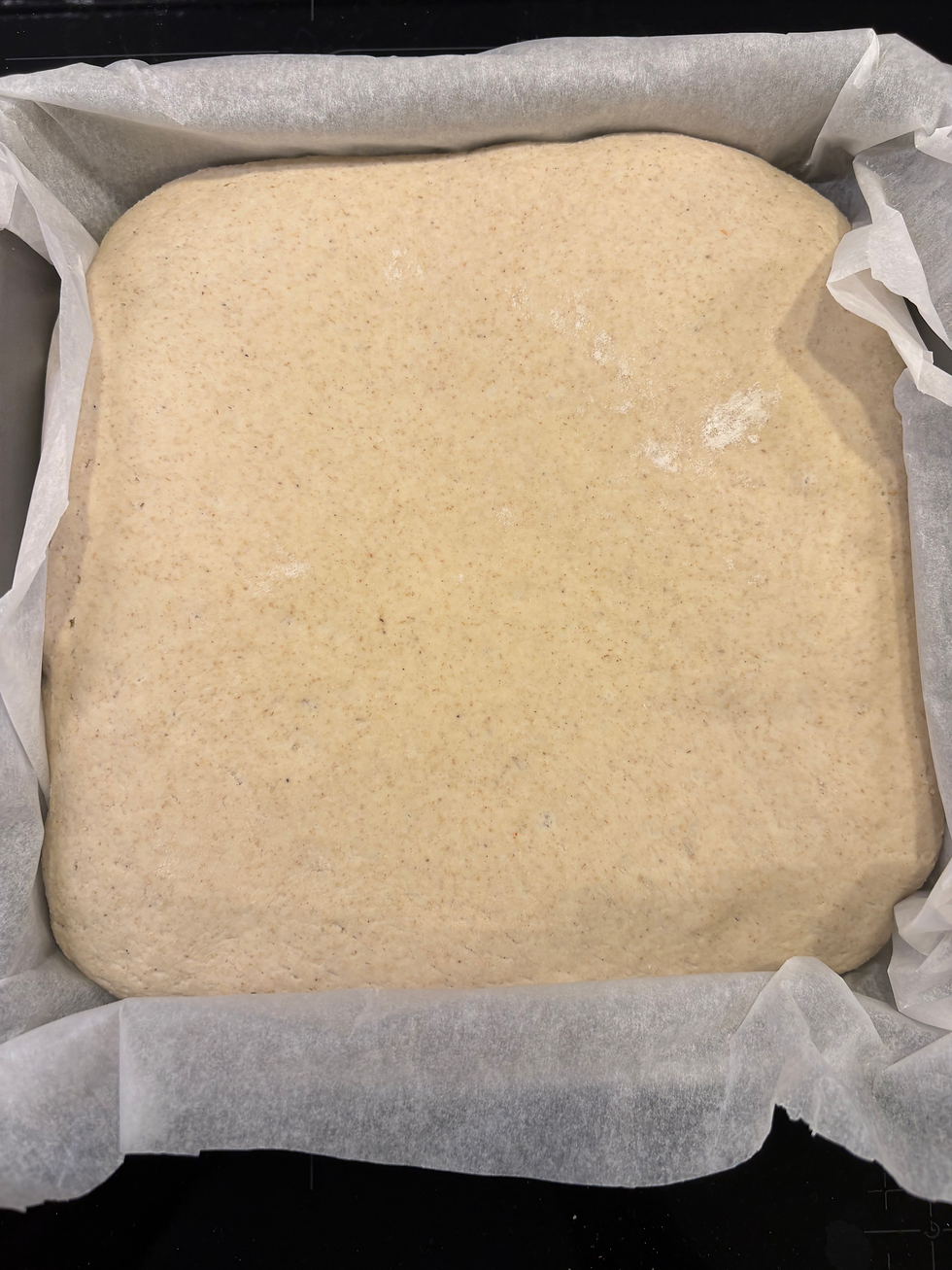
Prepare a shallow cake tin by lining it with baking parchment. We used a square one about 24 cms
Stretch or roll out the dough to fit the tin and then leave it covered with a damp cloth for 30-60 minutes to rise.
Prepare the oven at 220C fan and then bake in hte centre of the oven for around 30 minutes. It is cooked if the bread sounds hollow when tapped on the base.
Turn out and allow to cool before cutting into 8 slices.
Observations
We avoided olive oil in the mix or the addition of any honey although there are recipes out there. We
wanted to keep simple bread, simply made.
The resulting bread cut into 8 slices was really quite good and delivered about 1.2g beta glucan per slice with 7.7g protein for 225 Kcal , 44g carbohydrate, 3.6g fibre and 2.3g fat (unsaturated).
We were surprised in a good way by the extent to which the gluten in the white flour worked to

structure the bread. It accepted a combination of kneading and stretch and turn techniques over about three hours of rising. We baked it focaccia style in a square shallow tin that was lined and oiled with the EVOO for about 20 minutes or at least until the loaf sounded hollow when tapped.
We shaped and actually rolled the dough to fit the tin as it wasn’t as soft as focaccia dough despite the 80% hydration.
The loaf will provide us with about a weeks supply of additional beta-glucan where we fall short on pearl barley, pinhead oats and oat milk. We’ll probably put it the freezer but will keep the first batch in the fridge to see how long it keeps fresh having been sliced and wrapped in greaseproof paper.
We also used a barley flour mix (250g) to strong white flour (250g) and treated it the same sa the oat version. If anything the taste was superior in the barley mix. the. mix was stickier at the same hydration level (80%) and so was a little more of a challenge to manoeuvre but we used bread paddles ( or whatever they are called). The result is shown below:


Comments